
In the earliest manifestos of East Fork, our co-founder John described our approach as a “rigorous devotion” to the art of making. Fifteen years in, our materials, processes and ideas have evolved. But our commitment to craft—both in how and what we make—remains central to everything we do.
In a recent conversation reflecting on craft today, East Fork’s Senior Content Manager, Mallory S., and Videographer & Photographer Donnie B. discuss film photography, going analog and how they’ve incorporated the medium into recent photoshoots.
MS: How did you get into shooting film?
DB: I had an interest in photography in my late twenties, and then at some point my friends were trying out Holgas, which are toy cameras that shoot film. The appeal of Holgas—this was in 2012, 2011 maybe—was that they have these light leaks from being a toy camera, and you get “happy accidents” in the final results, and I got really into it.
Because it’s a toy camera, you're not worrying about your shutter speed or your aperture since you can't control those things, it was a way to focus on composition.
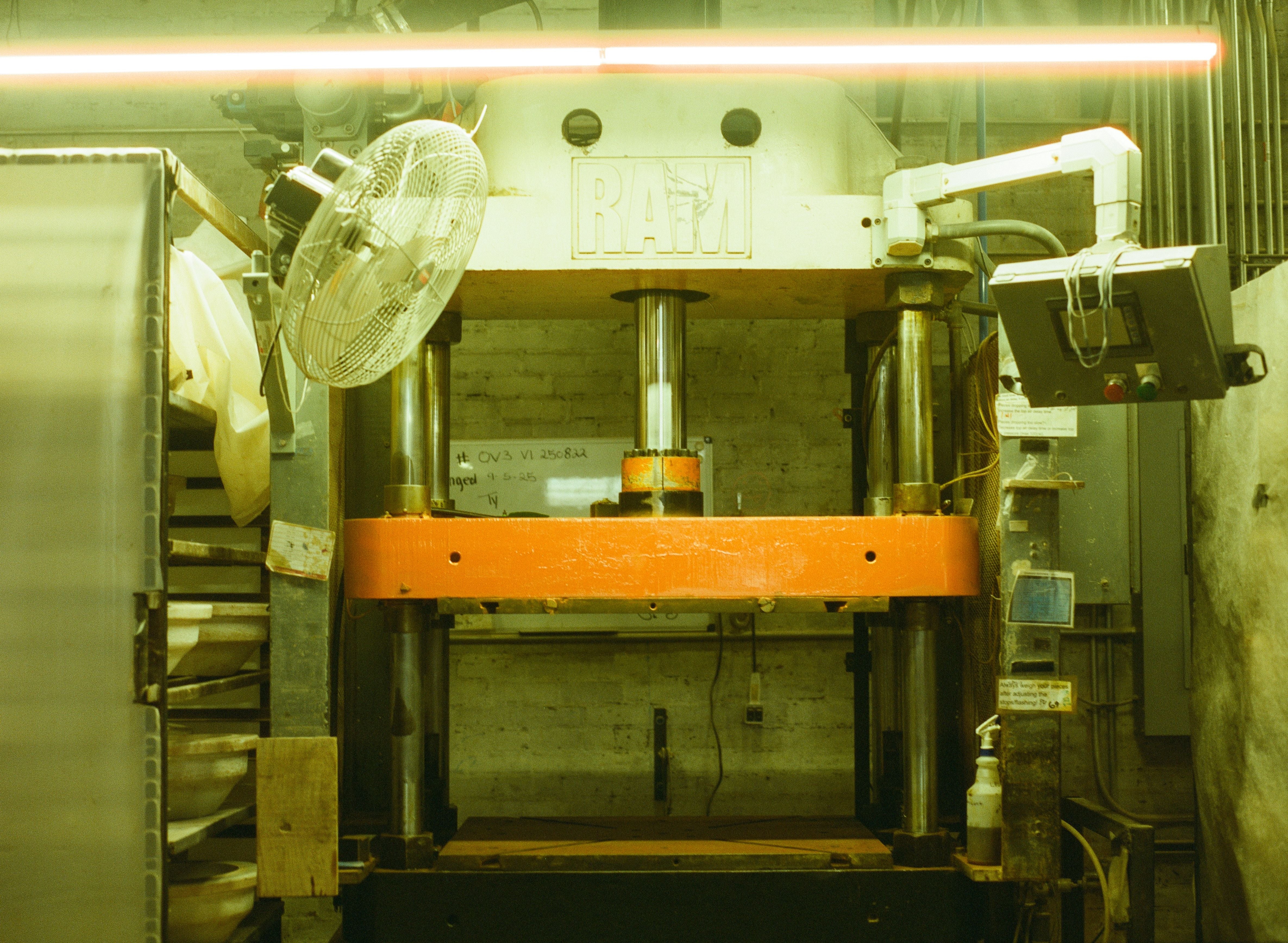
The RAM press in our factory by Donnie B.
MS: When I was in high school, my dad dug up some old Canon EOS film cameras. We went out in Downtown Memphis and he taught me how to use them—it was all manual so figuring out shutter speed, ISO, aperture and all that stuff. I shot a couple practice rolls, and when we got them back there were actually some really good images, so I think that's what got me started on film.
I had been interested in digital photography, but I was always disappointed with how the images looked straight out of camera. I didn't really know how to edit so I would get so bogged down in the moment with what was on the screen not looking as beautiful as the scene in front of me. That's what I like about film, you get to just experience the moment and capture it.
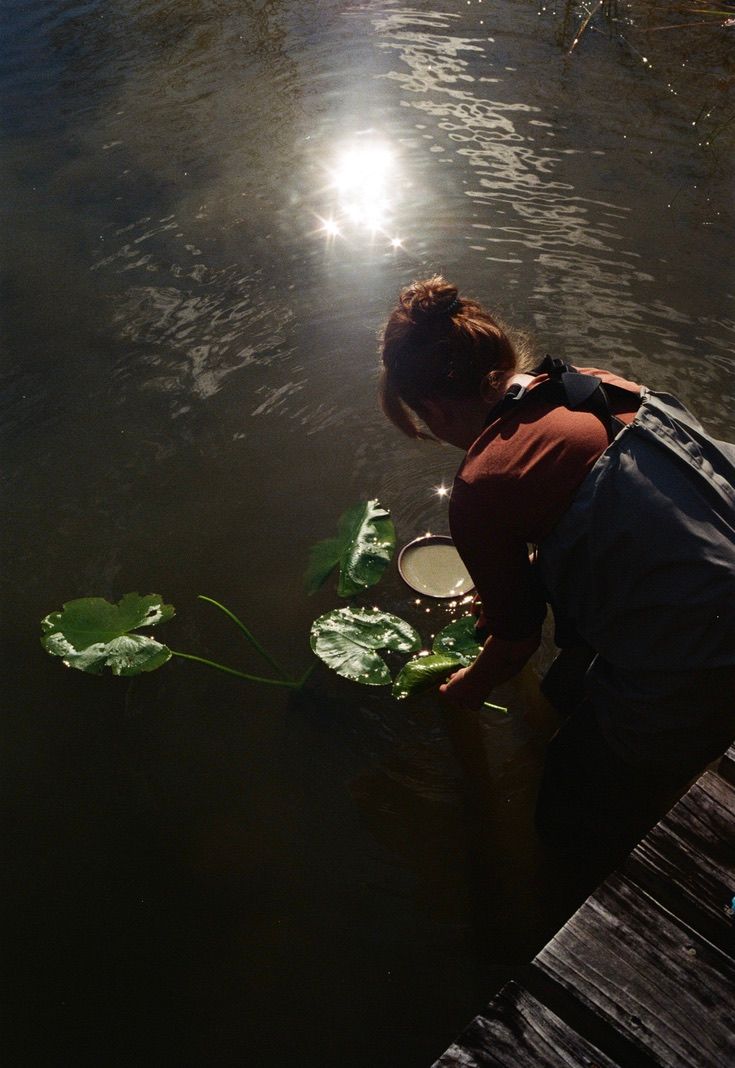
Head of Design, Nicole, in the pond at the Water Lily shoot by Mallory S.
MS: Did you ever feel the limitations of a toy camera?
DB: The opposite, the limitations actually lead to more creativity. I started to play with things like long exposures at night. Also double exposures where you just don't wind the film after you take the shot. My favorite was to shoot the skylines of buildings in Boston and then flip it upside down in that same exact spot, so you have the two skylines like a border on the image.
I eventually wanted more control over the actual picture taking process, so I moved to a Mamiya 645, which is the same medium format film but just on a more professional level.
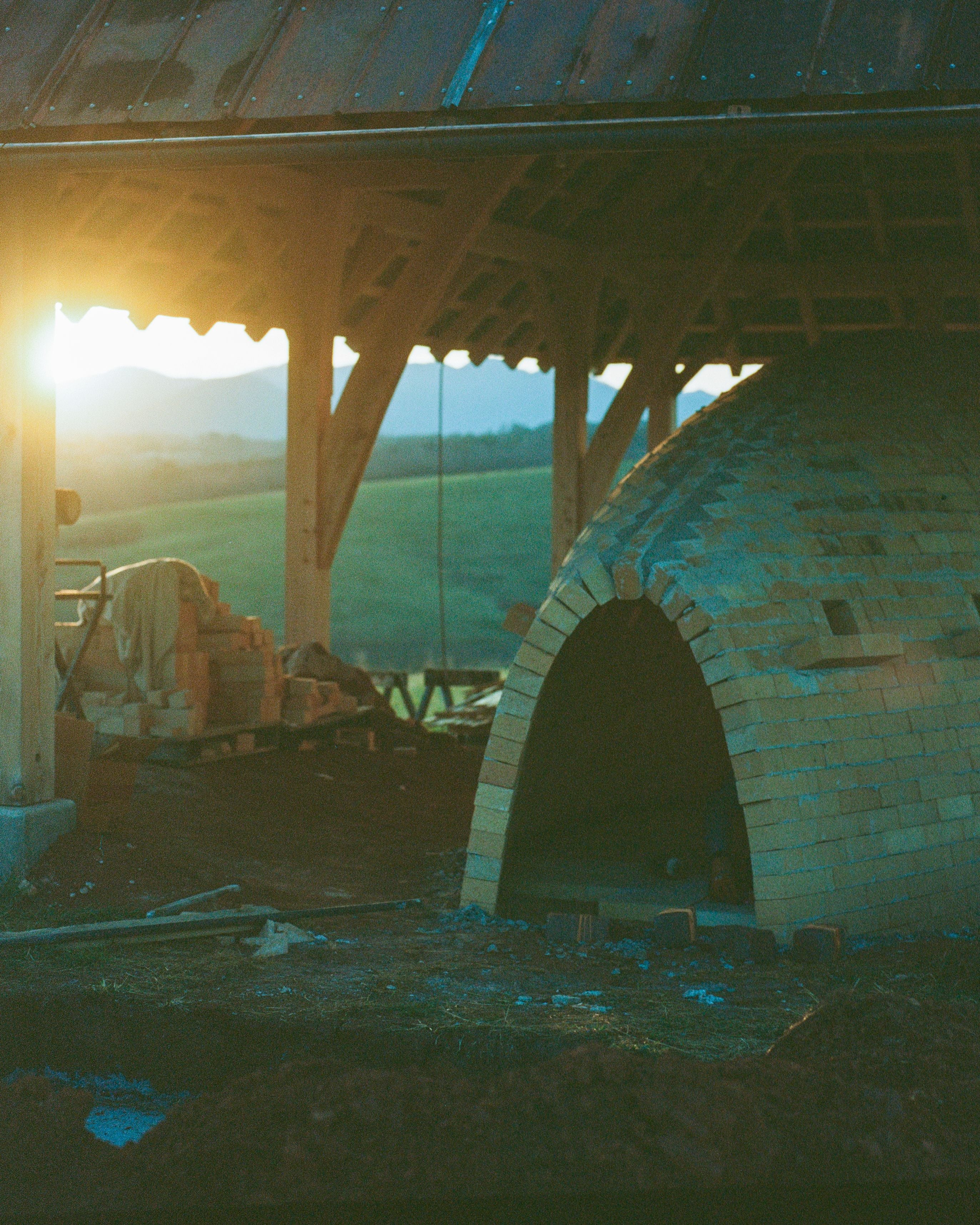
Co-Founder, John's kiln at sunset by Donnie B.
MS: What draws you to film?
DB: Like you were saying, it slowed me down. With digital you just shoot, shoot, shoot, and then you have a thousand photos. When you edit them you have maybe 100 at best.
So with film, I’m taking a moment, I’m not thinking, “oh, I can just edit it later.” You have a much more thoughtful process going on, where you’re really thinking about your composition.
When I was living in San Francisco, there was a public dark room where I was able to develop and print my own black and white film. Being able to do the whole thing from start to finish was very satisfying—learning the different elements of control you have over the finished photo and then having an 8x10 when you're done.
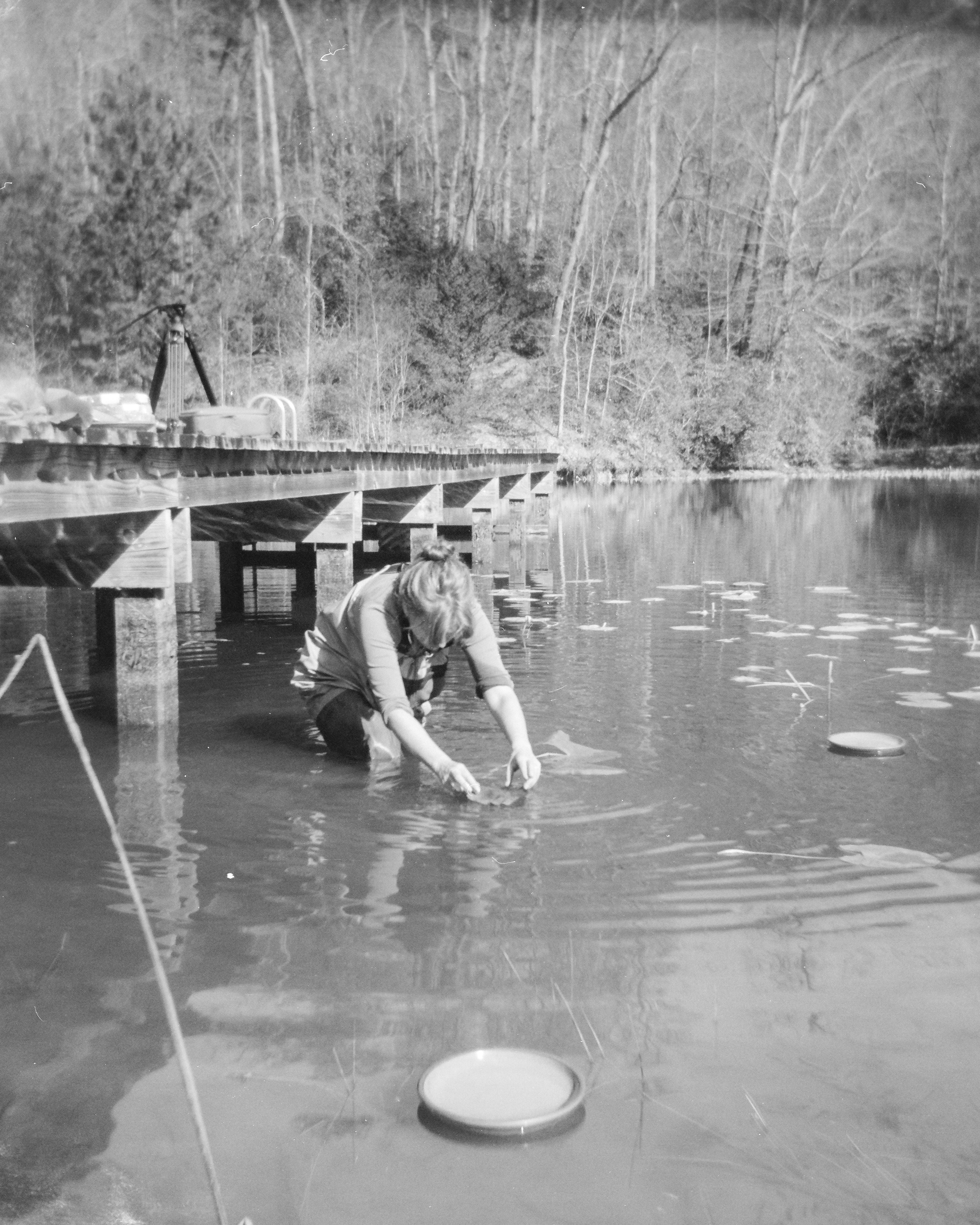
Nicole in the pond at the Water Lily shoot by Donnie B.
MS: I feel like what drew me in was the absence of the technical aspect. My two favorite film cameras, the only two I shoot on now, were both gifts.
One is more manual—there are settings that I have to take into account when I'm shooting, but it's pretty easy to use, and the other is a fully automatic point-and-shoot. When it comes to editing, all I’ll ever do is some color adjustment and straightening after the fact.
I really don't know that much about film from a technical standpoint, but I think I like that about it. It’s a fun thing to do outside of work that I don't have to put too much thought into. The way I approach it, shooting film is more simplistic so it feels more relaxing to me.
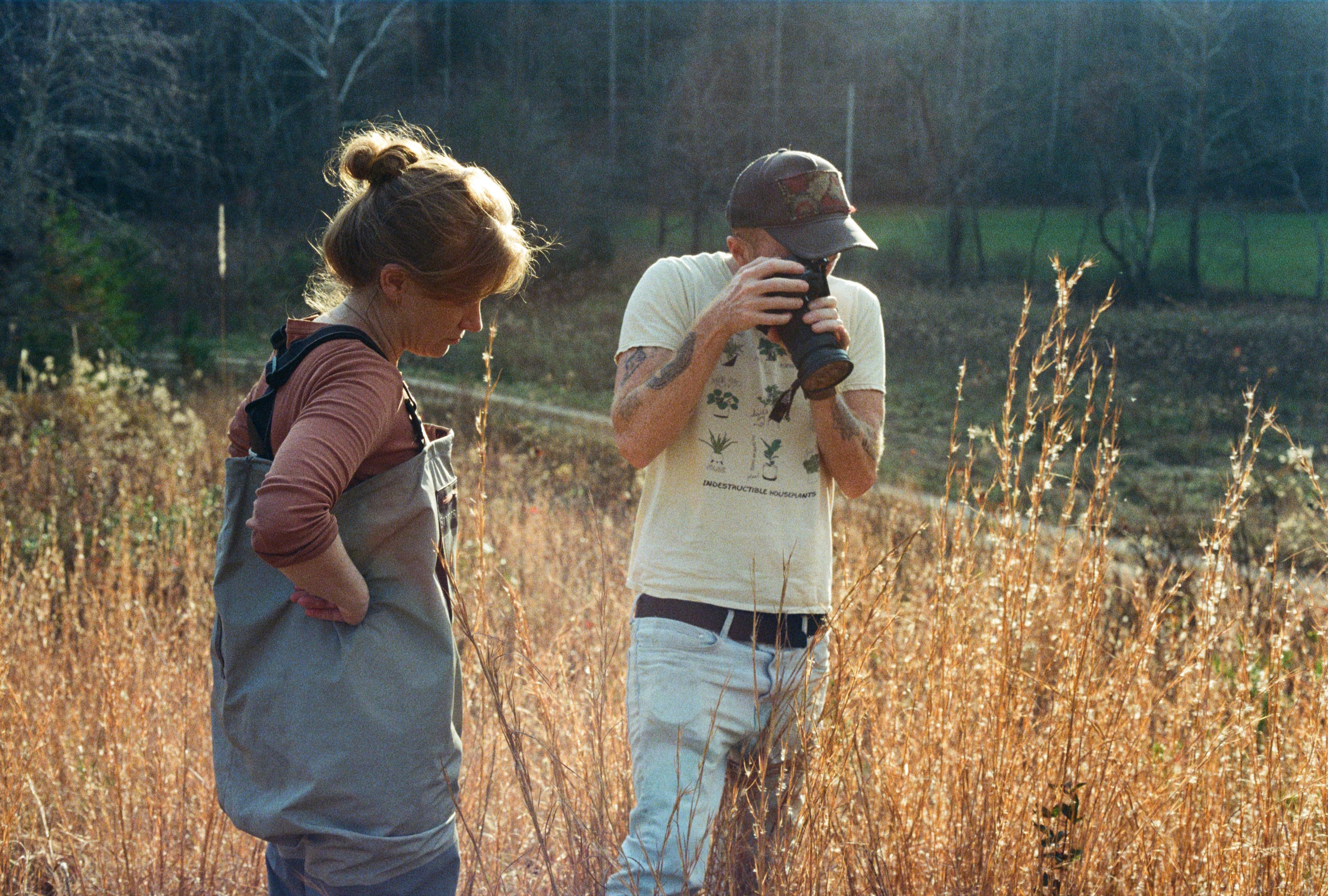
Nicole and Donnie at the Water Lily photo shoot by Mallory S.
DB: I actually hadn’t picked up my film cameras since 2017, but I was really inspired by your work and the fact that you had started producing these really beautiful behind-the-scenes shots of some of our East Fork photo shoots with your film camera.
I had been wanting to get back into film—I used a bunch of expired film during the Water Lily shoot, so not many of them came out but it was the first step in getting back into it.
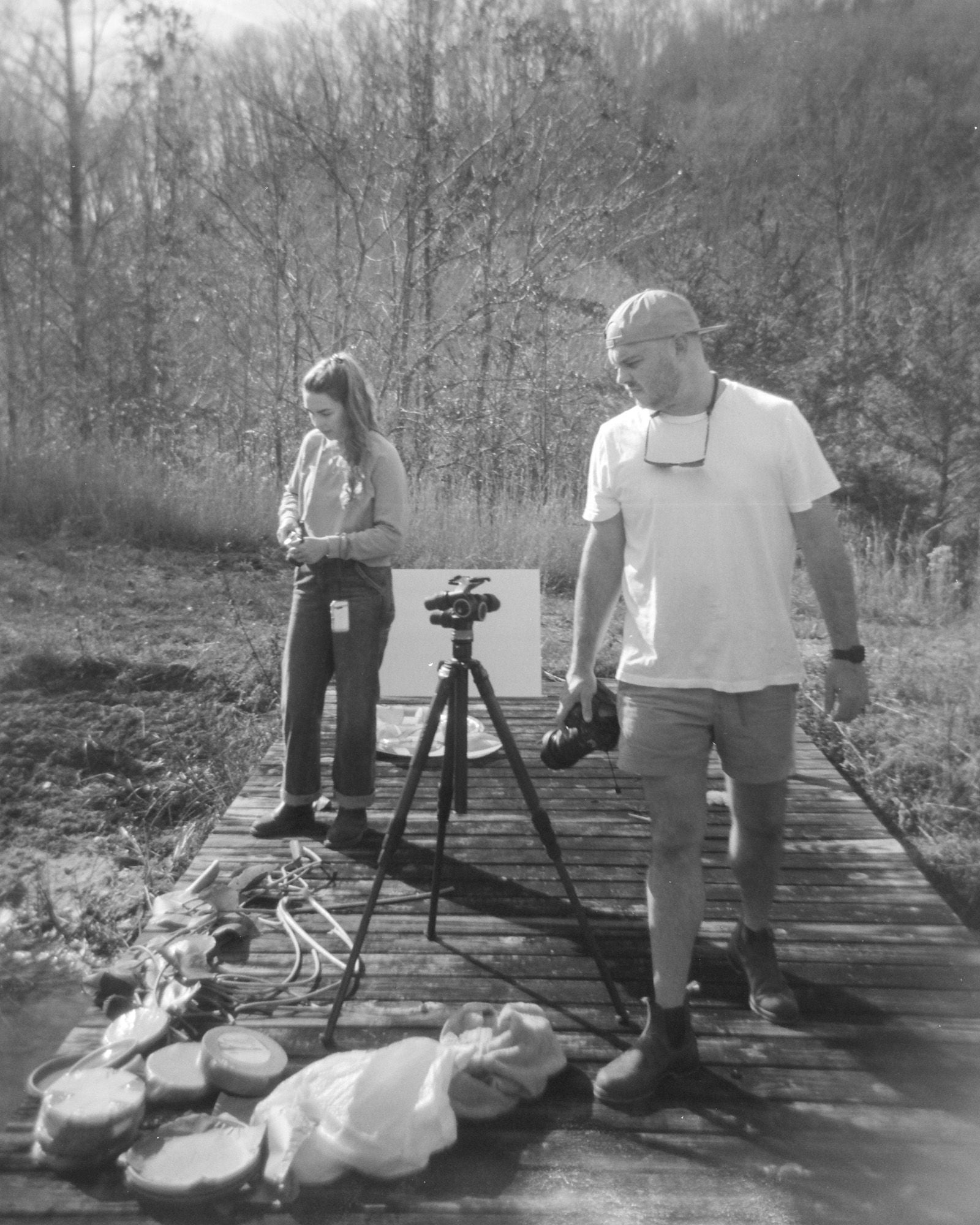
Mallory and photographer, Tim, on the dock at the Water Lily shoot by Donnie B.
MS: How does shooting on film differ from the digital photography you shoot for East Fork?
DB: All the digital work that we do for East Fork has to be pretty precise, exactly the way we want it to look, because it's going to be the face of what represents our company, so it has to be exactly to Nicole’s (our Head of Design) vision. With film we get to play around a little bit, and it’s not so consequential. It’s a nice little playground for us.
MS: I think it's a good way to show behind the scenes too because it shows the messier aspects of the shoot in a more beautiful way than an iPhone does. It was perfect for that Water Lily shoot because we had such beautiful golden light coming through the grass and reflecting off the pond as we were finishing up for the day.
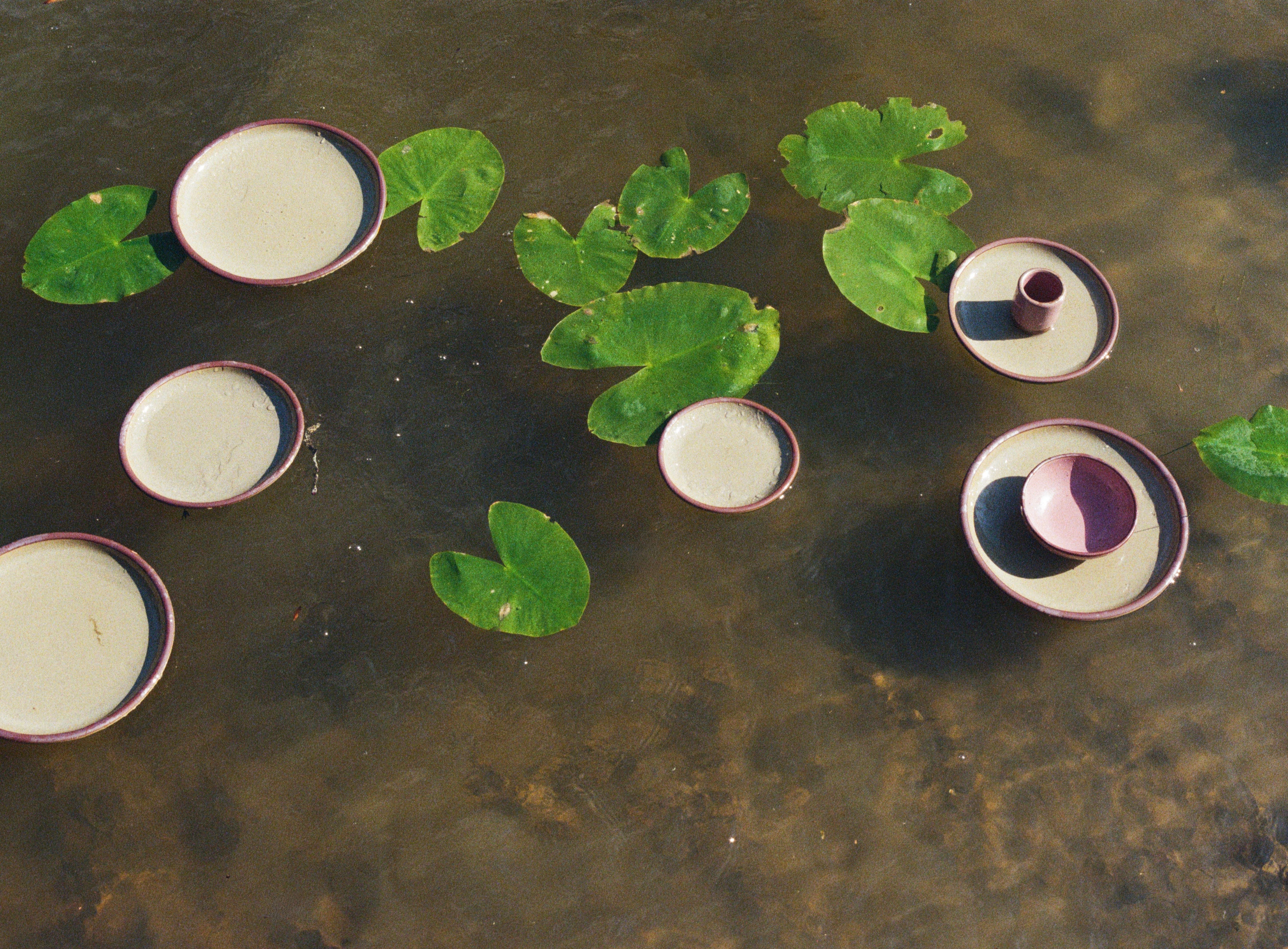
Water Lily and Thistle amongst the lily pads by Mallory S.
To me, the best part of shooting on film is the anticipation of waiting to get the call that it's ready. Dropping my film off and waiting the 10 days it takes for them to email it to me—I look forward to it that whole time. It’s such a bummer to get a roll back that looks horrible after you've been thinking about it for weeks, but on the other side of the coin when you get a good roll back there's nothing more fun than sifting through the images.
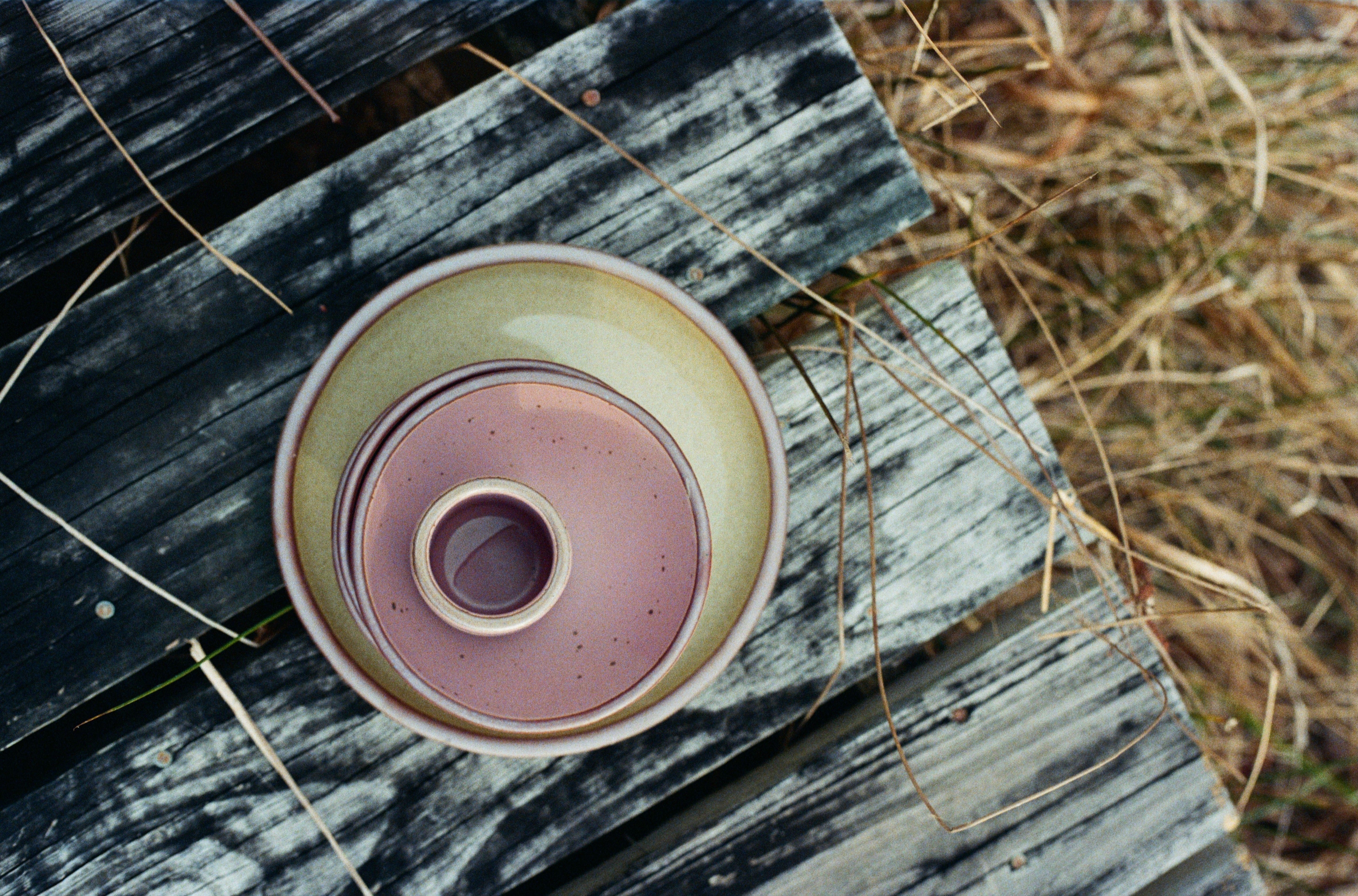
Thistle and Water Lily on the dock by Mallory S.
DB: That was something else I realized early on—with film, you are not getting that instant gratification. You have to wait and see what happened. In some ways it's a little more freeing because you're not bound to that moment where you're like, “that’s not exactly what I want.” It’s not perfect, it is what it is, I took it and we'll just have to wait and see.
MS: I love that part of it.

Donnie at the Water Lily shoot by Mallory S.
DB: With film there's a certain amount of control that you have to give up, and that's the same when we go into nature and shoot digitally. There's a huge amount of control we're giving up outside that we typically have in the studio. There's definitely a parallel there—the idea that we’re opening ourselves to more potential happy accidents, elements that are out of our control.
MS: I’ve personally really enjoyed bringing film into East Fork more recently. Getting to shoot film for work is such a fun part of the job and something that I've always loved doing, so getting to do it for East fork has been really creatively invigorating for me. Color is such a big part of East Fork, so I’m enjoying playing with capturing that on film for recent launches.
